The os.mktemp function in Python is often used to create a unique temporary file name. This function generates a name by replacing the last six characters of a provided template string with random characters. However, it’s important to understand how it operates under the hood to avoid potential pitfalls.
When you invoke os.mktemp, you typically pass a template string that includes a series of X’s, which get replaced by random characters. The uniqueness of the generated name is not guaranteed until the file is created, which is a significant point to consider when dealing with temporary files.
import os

temp_file_name = os.mktemp('/tmp/example_XXXXXX')
print(temp_file_name)
In this example, the mktemp function generates a unique name for a temporary file in the /tmp directory. The output will resemble something like /tmp/example_abc123, where abc123 is a random string. It is essential to remember that merely generating a name does not create the file; you still need to open it explicitly.
Using os.mktemp can lead to race conditions if multiple processes generate a temporary file concurrently, as the name can be generated before a file is created. This situation raises security concerns, as an attacker could potentially exploit this to create a file with the same name before your program does, leading to unintended consequences.
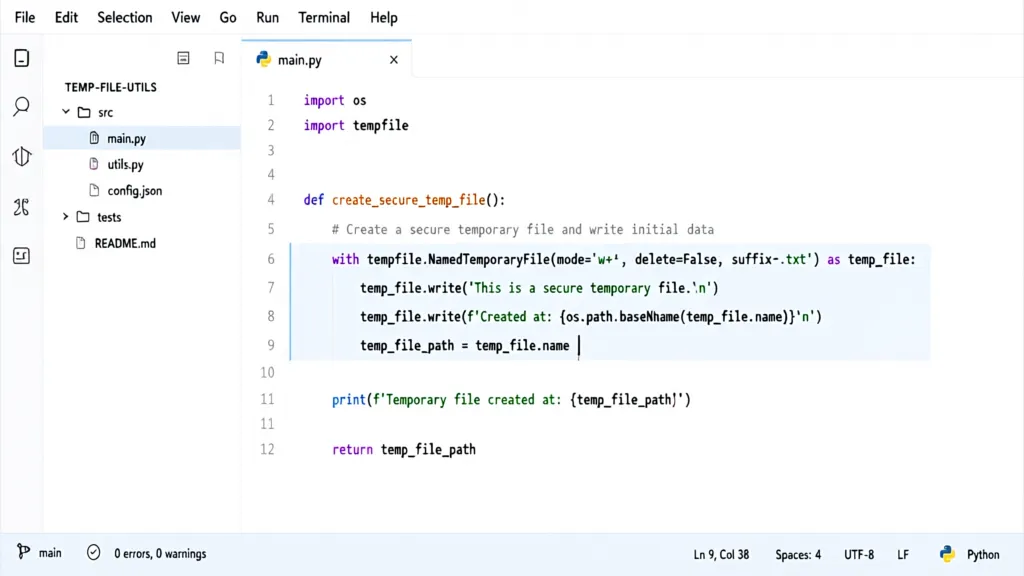
To mitigate these issues, you should consider using the tempfile module, which provides higher-level functions for creating temporary files and directories. The module offers better security and reliability compared to directly using os.mktemp.
import tempfile

with tempfile.NamedTemporaryFile(delete=True) as temp_file:
    print(temp_file.name)
The NamedTemporaryFile function creates a temporary file and ensures that it’s securely managed. It automatically handles cleanup when the file is closed, which significantly reduces the risk of leaving behind unwanted temporary files in your filesystem.
Ultimately, while os.mktemp may still appear in some legacy code, it is advisable to transition to using the tempfile module for any new development. The added security features and ease of use make it the preferred choice for managing temporary files in modern Python applications.

Visa Physical Gift Card $200 (plus $6.95 Purchase Fee)
Now retrieving the price.
(as of October 24, 2026 20:23 GMT +00:00 - More infoProduct prices and availability are accurate as of the date/time indicated and are subject to change. Any price and availability information displayed on [relevant Amazon Site(s), as applicable] at the time of purchase will apply to the purchase of this product.)Exploring security concerns with temporary files
Security concerns with temporary files extend beyond just the race conditions associated with os.mktemp. The very nature of temporary files means they can be exposed to unauthorized access if not managed correctly. For instance, if a temporary file is created in a publicly accessible directory, other users on the system may be able to read or write to that file, which can lead to sensitive data exposure.
Moreover, there is a risk of file descriptor leakage if temporary files are not properly closed or deleted. This can happen when a program crashes or exits unexpectedly, leaving behind files that can be manipulated by malicious actors. Therefore, it’s vital to ensure that temporary files are created in secure locations and that their lifecycle is properly managed.
When using the tempfile module, the context manager pattern (as shown previously) helps alleviate these concerns by ensuring that temporary files are cleaned up promptly. However, developers should also be aware of the permissions set on these files. By default, temporary files created by tempfile have restrictive permissions, but it’s worth verifying this behavior based on your application’s requirements.
import os
import tempfile

with tempfile.NamedTemporaryFile(delete=False) as temp_file:
    print(f"Temporary file created at: {temp_file.name}")
    os.chmod(temp_file.name, 0o600)  # Set permissions to read/write for the owner only
In the code snippet above, we not only create a temporary file but also modify its permissions to restrict access. That is a useful practice when dealing with sensitive data, ensuring that only the owner can read or write to the file.
Another critical aspect to consider is the potential for symbolic link attacks. An attacker could create a symbolic link from a known temporary file name to a protected file, allowing them to manipulate or overwrite sensitive files. To prevent this, always use the secure methods provided by the tempfile module, which creates files in a way that mitigates the risk of such attacks.
As we move forward, it’s important to explore best practices for file cleanup. Automated cleanup mechanisms can be an effective way to ensure that temporary files do not linger longer than necessary. For example, using the delete=True parameter in NamedTemporaryFile not only simplifies cleanup but also adds a layer of security by ensuring files are removed immediately after use.
with tempfile.NamedTemporaryFile(delete=True) as temp_file:
    # Use the temporary file
    pass  # File is automatically deleted after this block
In scenarios where you might need to retain a temporary file beyond the immediate scope, consider implementing a manual cleanup strategy. This could involve using a try/finally block to ensure that files are deleted even if an error occurs during processing.
temp_file = tempfile.NamedTemporaryFile(delete=False)
try:
    # Use the temporary file
    pass
finally:
    os.remove(temp_file.name)
Implementing robust cleanup routines is essential for maintaining system hygiene, especially in applications that generate a high number of temporary files or run in environments where file space is a concern. Additionally, using logging mechanisms can help track the creation and deletion of temporary files, which can be invaluable for debugging and security audits.
While os.mktemp has its historical use cases, the modern Python ecosystem favors the tempfile module for its enhanced functionality and security features. Developers should familiarize themselves with the various functions that tempfile offers, such as TemporaryDirectory, which allows for the creation of temporary directories that can also be cleaned up automatically.
Best practices for file cleanup
When working with temporary files, it’s essential to ensure that they are cleaned up appropriately to prevent clutter and potential security risks. One effective approach is to use context managers, which automatically handle the cleanup of resources when the block is exited. This pattern is not only cleaner but also safer as it encapsulates the file handling logic.
For instance, using the tempfile.TemporaryFile function creates a temporary file this is deleted as soon as it’s closed. That’s particularly useful for transient data that does not need to persist beyond the execution of a particular operation.
import tempfile

with tempfile.TemporaryFile() as temp_file:
    temp_file.write(b'Some temporary data')
    temp_file.seek(0)
    print(temp_file.read())
In this example, the temporary file is created, used, and then automatically deleted when the context manager exits, ensuring that no residual files are left behind. This pattern not only simplifies the code but also minimizes the risk of leaving temporary files that could be exploited.
In cases where temporary files need to be created outside of a context manager, you should implement explicit cleanup mechanisms. Using a try/finally structure can help ensure that files are removed even if an exception occurs during processing. That’s critical in maintaining a clean environment and avoiding potential issues with file management.
temp_file = tempfile.NamedTemporaryFile(delete=False)
try:
    # Perform operations with the temporary file
    pass
finally:
    os.remove(temp_file.name)
Additionally, consider logging the creation and deletion of temporary files. This practice provides visibility into file operations and can be useful for debugging and auditing purposes. By keeping track of these files, developers can ensure that all temporary files are accounted for and that appropriate cleanup actions are taken.
Another important aspect of file cleanup is setting appropriate permissions. When creating temporary files, especially in shared environments, it’s crucial to restrict access to sensitive data. The os.chmod function can be employed to modify file permissions after creation, ensuring that only authorized users can access the temporary files.
import os
import tempfile

with tempfile.NamedTemporaryFile(delete=False) as temp_file:
    os.chmod(temp_file.name, 0o600)  # Set permissions to read/write for owner only
    # Use the temporary file
By following these best practices for file cleanup, developers can significantly reduce the risk of security vulnerabilities and maintain a tidy filesystem. The emphasis should be on using high-level abstractions provided by the tempfile module, which inherently manage many of these concerns, allowing developers to focus on the core logic of their applications.
As we consider alternatives to os.mktemp, it becomes clear that the tempfile module offers not just security but also convenience and reliability. With functions like TemporaryDirectory, developers can create temporary directories that are automatically cleaned up, further enhancing the management of temporary resources. This is particularly useful in scenarios where multiple temporary files are generated, as it provides a clean namespace for such files.
import tempfile

with tempfile.TemporaryDirectory() as temp_dir:
    print(f'Temporary directory created at: {temp_dir}')
    # Create files within this temporary directory
    pass  # All files will be deleted after this block
By using the features of the tempfile module, developers can adopt a more robust and secure approach to handling temporary files, ensuring that their applications are both efficient and secure.
Alternatives to os.mktemp in modern Python
The os.mktemp function in Python is often used to create a unique temporary file name. This function generates a name by replacing the last six characters of a provided template string with random characters. However, it especially important to understand how it operates under the hood to avoid potential pitfalls.
When you invoke os.mktemp, you typically pass a template string that includes a series of X’s, which get replaced by random characters. The uniqueness of the generated name is not guaranteed until the file is created, which is a significant point to consider when dealing with temporary files.
import os

temp_file_name = os.mktemp('/tmp/example_XXXXXX')
print(temp_file_name)
In this example, the mktemp function generates a unique name for a temporary file in the /tmp directory. The output will resemble something like /tmp/example_abc123, where abc123 is a random string. It is essential to remember that merely generating a name does not create the file; you still need to open it explicitly.
Using os.mktemp can lead to race conditions if multiple processes generate a temporary file simultaneously, as the name can be generated before a file is created. This situation raises security concerns, as an attacker could potentially exploit this to create a file with the same name before your program does, leading to unintended consequences.
To mitigate these issues, you should consider using the tempfile module, which provides higher-level functions for creating temporary files and directories. The module offers better security and reliability compared to directly using os.mktemp.
import tempfile

with tempfile.NamedTemporaryFile(delete=True) as temp_file:
    print(temp_file.name)
The NamedTemporaryFile function creates a temporary file and ensures that it is securely managed. It automatically handles cleanup when the file is closed, which significantly reduces the risk of leaving behind unwanted temporary files in your filesystem.
Ultimately, while os.mktemp may still appear in some legacy code, it’s advisable to transition to using the tempfile module for any new development. The added security features and ease of use make it the preferred choice for managing temporary files in modern Python applications.
Security concerns with temporary files extend beyond just the race conditions associated with os.mktemp. The very nature of temporary files means they can be exposed to unauthorized access if not managed correctly. For instance, if a temporary file is created in a publicly accessible directory, other users on the system may be able to read or write to that file, which can lead to sensitive data exposure.
Moreover, there is a risk of file descriptor leakage if temporary files are not properly closed or deleted. This can happen when a program crashes or exits unexpectedly, leaving behind files that can be manipulated by malicious actors. Therefore, it is vital to ensure that temporary files are created in secure locations and that their lifecycle is properly managed.
When using the tempfile module, the context manager pattern (as shown previously) helps alleviate these concerns by ensuring that temporary files are cleaned up promptly. However, developers should also be aware of the permissions set on these files. By default, temporary files created by tempfile have restrictive permissions, but it is worth verifying this behavior based on your application’s requirements.
import os
import tempfile

with tempfile.NamedTemporaryFile(delete=False) as temp_file:
    print(f"Temporary file created at: {temp_file.name}")
    os.chmod(temp_file.name, 0o600)  # Set permissions to read/write for the owner only
In the code snippet above, we not only create a temporary file but also modify its permissions to restrict access. That’s a useful practice when dealing with sensitive data, ensuring that only the owner can read or write to the file.
Another critical aspect to consider is the potential for symbolic link attacks. An attacker could create a symbolic link from a known temporary file name to a protected file, allowing them to manipulate or overwrite sensitive files. To prevent this, always use the secure methods provided by the tempfile module, which creates files in a way that mitigates the risk of such attacks.
As we move forward, it is important to explore best practices for file cleanup. Automated cleanup mechanisms can be an effective way to ensure that temporary files do not linger longer than necessary. For example, using the delete=True parameter in NamedTemporaryFile not only simplifies cleanup but also adds a layer of security by ensuring files are removed immediately after use.
with tempfile.NamedTemporaryFile(delete=True) as temp_file:
    # Use the temporary file
    pass  # File is automatically deleted after this block
In scenarios where you might need to retain a temporary file beyond the immediate scope, consider implementing a manual cleanup strategy. This could involve using a try/finally block to ensure that files are deleted even if an error occurs during processing.
temp_file = tempfile.NamedTemporaryFile(delete=False)
try:
    # Use the temporary file
    pass
finally:
    os.remove(temp_file.name)
Implementing robust cleanup routines is essential for maintaining system hygiene, especially in applications that generate numerous temporary files or run in environments where file space is a concern. Additionally, using logging mechanisms can help track the creation and deletion of temporary files, which can be invaluable for debugging and security audits.
While os.mktemp has its historical use cases, the modern Python ecosystem favors the tempfile module for its enhanced functionality and security features. Developers should familiarize themselves with the various functions that tempfile offers, such as TemporaryDirectory, which allows for the creation of temporary directories that can also be cleaned up automatically.
When working with temporary files, it’s essential to ensure that they’re cleaned up appropriately to prevent clutter and potential security risks. One effective approach is to use context managers, which automatically handle the cleanup of resources when the block is exited. This pattern is not only cleaner but also safer as it encapsulates the file handling logic.
For instance, using the tempfile.TemporaryFile function creates a temporary file this is deleted as soon as it’s closed. That’s particularly useful for transient data that does not need to persist beyond the execution of a particular operation.
import tempfile

with tempfile.TemporaryFile() as temp_file:
    temp_file.write(b'Some temporary data')
    temp_file.seek(0)
    print(temp_file.read())
In this example, the temporary file is created, used, and then automatically deleted when the context manager exits, ensuring that no residual files are left behind. This pattern not only simplifies the code but also minimizes the risk of leaving temporary files that could be exploited.
In cases where temporary files need to be created outside of a context manager, you should implement explicit cleanup mechanisms. Using a try/finally structure can help ensure that files are removed even if an exception occurs during processing. That is critical in maintaining a clean environment and avoiding potential issues with file management.
temp_file = tempfile.NamedTemporaryFile(delete=False)
try:
    # Perform operations with the temporary file
    pass
finally:
    os.remove(temp_file.name)
Additionally, consider logging the creation and deletion of temporary files. This practice provides visibility into file operations and can be useful for debugging and auditing purposes. By keeping track of these files, developers can ensure that all temporary files are accounted for and that appropriate cleanup actions are taken.
Another important aspect of file cleanup is setting appropriate permissions. When creating temporary files, especially in shared environments, it’s crucial to restrict access to sensitive data. The os.chmod function can be employed to modify file permissions after creation, ensuring that only authorized users can access the temporary files.
import os
import tempfile

with tempfile.NamedTemporaryFile(delete=False) as temp_file:
    os.chmod(temp_file.name, 0o600)  # Set permissions to read/write for owner only
    # Use the temporary file
By following these best practices for file cleanup, developers can significantly reduce the risk of security vulnerabilities and maintain a tidy filesystem. The emphasis should be on using high-level abstractions provided by the tempfile module, which inherently manage many of these concerns, allowing developers to focus on the core logic of their applications.
As we consider alternatives to os.mktemp, it becomes clear that the tempfile module offers not just security but also convenience and reliability. With functions like TemporaryDirectory, developers can create temporary directories that are automatically cleaned up, further enhancing the management of temporary resources. That’s particularly useful in scenarios where multiple temporary files are generated, as it provides a clean namespace for such files.
import tempfile

with tempfile.TemporaryDirectory() as temp_dir:
    print(f'Temporary directory created at: {temp_dir}')
    # Create files within this temporary directory
    pass  # All files will be deleted after this block
By using the features of the tempfile module, developers can adopt a more robust and secure approach to handling temporary files, ensuring that their applications are both efficient and secure.