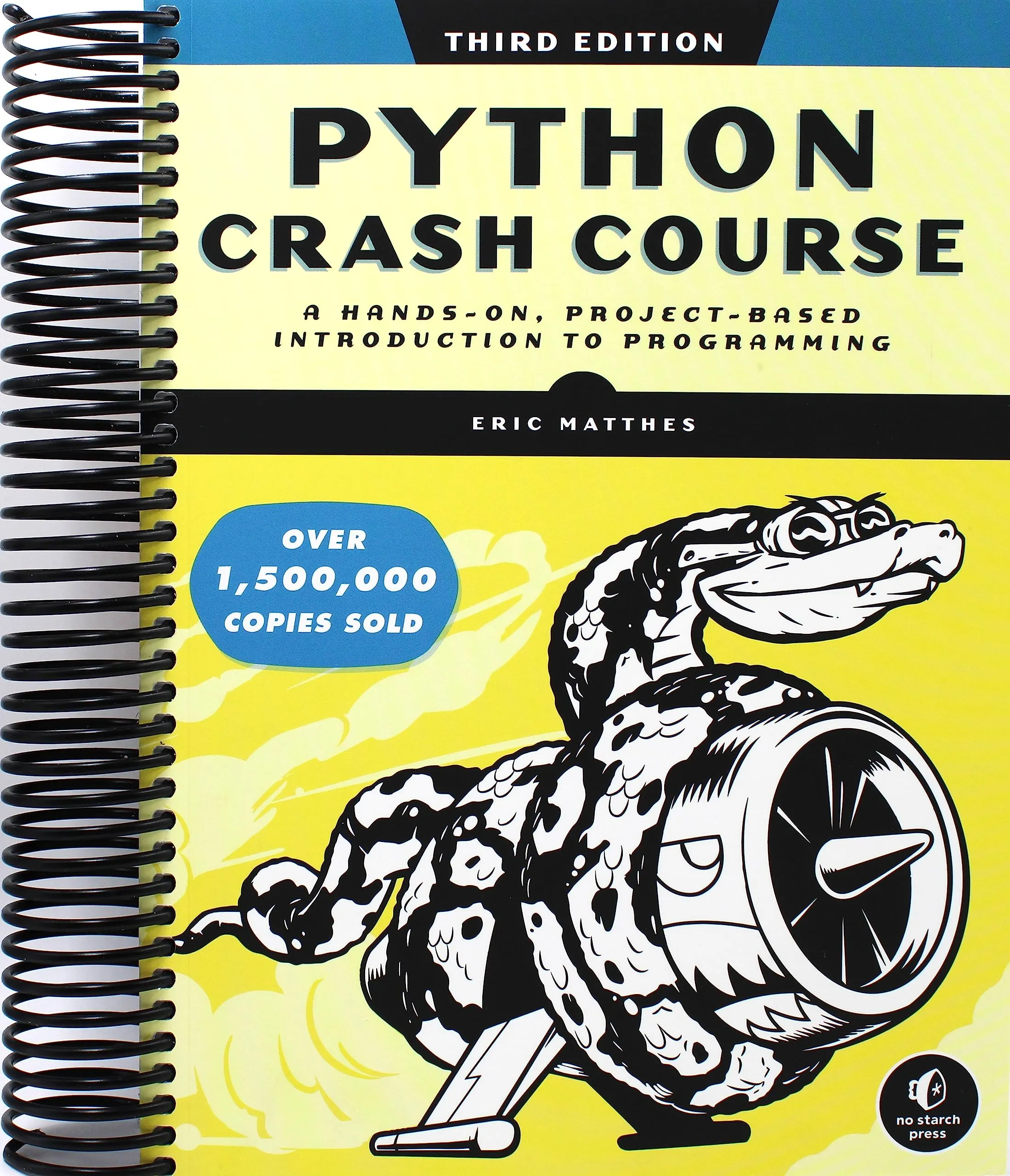
Many resources promise to teach you programming, but few execute on that promise as effectively as this one. The book’s design philosophy is clear: you learn programming by programming. It avoids the common pitfall of endlessly detailing syntax without context. Instead, it systematically builds your foundational knowledge and then immediately channels it into tangible projects. This approach directly addresses the most significant hurdle for new programmers: bridging the gap between knowing what a “for loop” is and knowing how to use it to build something useful.
The physical design, a spiral binding that lays flat, is a small but critical feature that reinforces its hands-on ethos. It’s designed to be used, not just read.
Who Should Read This book?
The value of an educational resource is relative to the learner’s starting point and goals. This book is exceptionally well-suited for several specific groups:
- The Absolute Beginner: If you have no prior programming experience, this is an excellent starting point. The pacing is deliberate, and the explanations are clear. It builds concepts layer by layer, minimizing the cognitive load that often overwhelms newcomers.
- The Experienced Professional Transitioning to Python: If you’re a developer proficient in another language (like Java, C#, or JavaScript) and need to get up to speed with Python quickly, the book is a highly efficient path. It will allow you to map your existing programming concepts onto Python’s syntax and idiomatic patterns.
- The “Stuck” Self-Learner: If you’ve dabbled with online tutorials but struggle to build your own projects from scratch, the book’s project-based second half is designed to overcome that specific barrier. It provides the structured, guided practice necessary to build confidence and independence.
Maximizing Your Return on Investment
To extract the most value from the book, your approach matters more than your aptitude. Treat it as a guided workshop, not a novel.
- Commit to Active Engagement: Do not just read the code. Type every example yourself. This process builds muscle memory and exposes typos and syntax errors, which are valuable learning experiences in themselves.
- Embrace “Productive Struggle”: When you encounter an error, resist the immediate urge to copy the correct solution. Spend time trying to debug it. This struggle is where the most durable learning occurs.
- Deconstruct and Reconstruct the Projects: After completing a project as written, take it apart. Ask “what if?” What if I changed this variable? What if I added a new feature? Try to implement a small modification on your own. This practice is the transition from apprentice to practitioner.
Who Might Look Elsewhere?
No single resource is optimal for everyone. The book is less suitable for:
- Experienced Python Developers: If you’re already building applications in Python, the book is too foundational. Your time would be better invested in specialized texts on topics like advanced architecture, performance tuning, or specific domains like machine learning or web framework internals.
- Academics or Those Needing Theoretical Depth: The book’s primary focus is pragmatic—teaching you how to use Python. While it covers necessary concepts, it isn’t a rigorous computer science textbook. If your goal is a deep, theoretical understanding of data structures, algorithm analysis, and computational theory, you will need to supplement this with more academic material.