So, you’re standing at the edge of the coding universe. It’s vast, it’s shimmering with possibilities, but you don’t have a ship. You see everyone else zipping around, building amazing things, and you’re stuck at the spaceport with a handful of confusing schematics. Every manual seems to be written for people who already know how to fly. That feeling—that mix of excitement and paralysis—is exactly where learning to code begins for most of us.
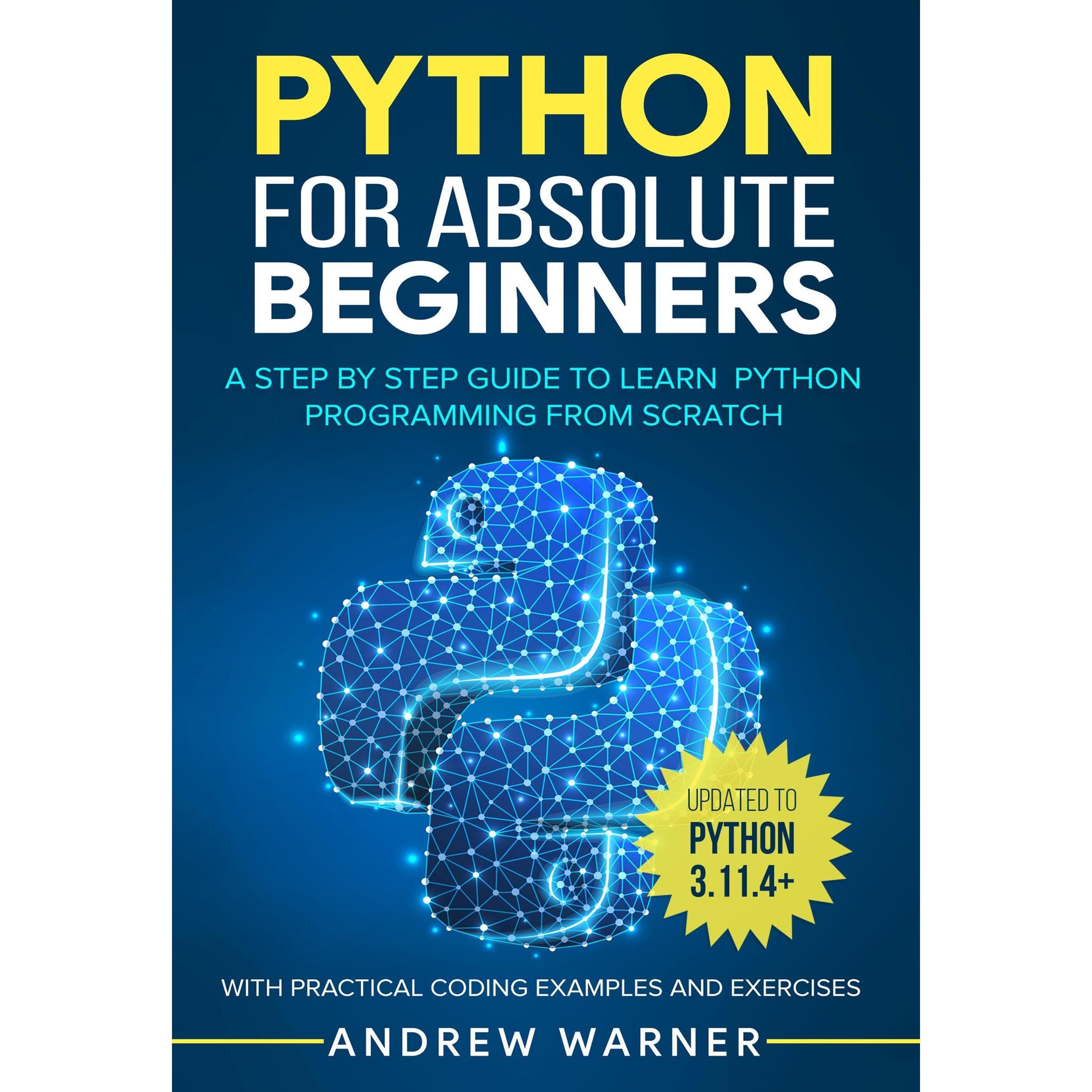
The first programming language you learn isn’t just about syntax; it is about building the mental scaffolding for how you’ll solve problems for the rest of your career. A bad start, with confusing examples and a focus on abstract trivia, is like building a foundation out of sand. A good start gives you a solid platform to build anything on. This is where a book like Python for Absolute Beginners comes into the picture.
Building Your Toolkit, One Piece at a Time
What I like about the approach described here is that it seems to understand the single most important thing for a beginner: momentum. It doesn’t just throw a dictionary of Python keywords at you and wish you luck. It starts at step zero: getting your workshop set up. Which tools do you need? How do you install them without pulling your hair out? Getting your environment running is the first victory, and it’s an important one.
From there, it’s about the fundamentals. But not just as a list to be memorized. You’ll learn about:
- Variables: The little labeled boxes where you store your stuff.
- Conditions: The basic decision-making logic, the “if this, then that” which is the heart of all programs.
- Loops: The secret to making a computer do a million things without you having to type a million commands.
- Classes: The blueprinting system for creating your own, more complex tools and components.
The promise of breaking down the code and explaining it in simple steps is where the magic is. It’s the difference between being handed a fish and being shown, step by step, how to build your own fishing rod, bait the hook, and find the right spot in the river.
Where It Gets Really Interesting
A book that just teaches you syntax is a phrasebook. It lets you ask “Where is the bathroom?” but it doesn’t let you have a conversation. The updated edition seems to get this. It pushes beyond the basics into the stuff that makes Python so powerful in the real world.
When you get to chapters on Pandas and Matplotlib, you’re not just coding anymore; you’re becoming a data detective. You’re taking messy spreadsheets and turning them into clear, insightful charts that tell a story. When it talks about automation with PDFs and Excel, it’s giving you the keys to building little robot helpers to do your boring work for you. And the inclusion of AI and Machine Learning isn’t just buzzword-chasing; it’s a peek under the hood of the most transformative technology of our time, showing you how to build with it, not just read about it.
The “Intelligent Research Assistant” capstone project sounds like the real deal—a project that forces you to connect all the dots, from data handling to AI analysis to visualization. That is where you stop being a student and start being a builder.
So, Who Is This Actually For?
Based on this breakdown, the book seems laser-focused on a few key people:
- The true absolute beginner. You’ve never written a line of code and the whole idea feels intimidating. The book seems designed to be your friendly guide, holding your hand from the very first step.
- The “dabbler” who gave up. Maybe you tried a YouTube tutorial or a confusing online course and bounced off hard. The project-based, step-by-step approach described here might provide the structure you were missing.
- The programmer from another discipline. Maybe you’re a web developer who knows JavaScript, or a sysadmin who knows Bash, and you need to get up to speed on Python for a new project or job. This book seems practical enough to get you productive quickly, without wading through computer science theory you already know.
If you’re already a seasoned Python developer, this isn’t for you. But if you’re standing at the edge of that programming universe looking for your first ship, the schematics in this book look solid, practical, and designed to get you flying.