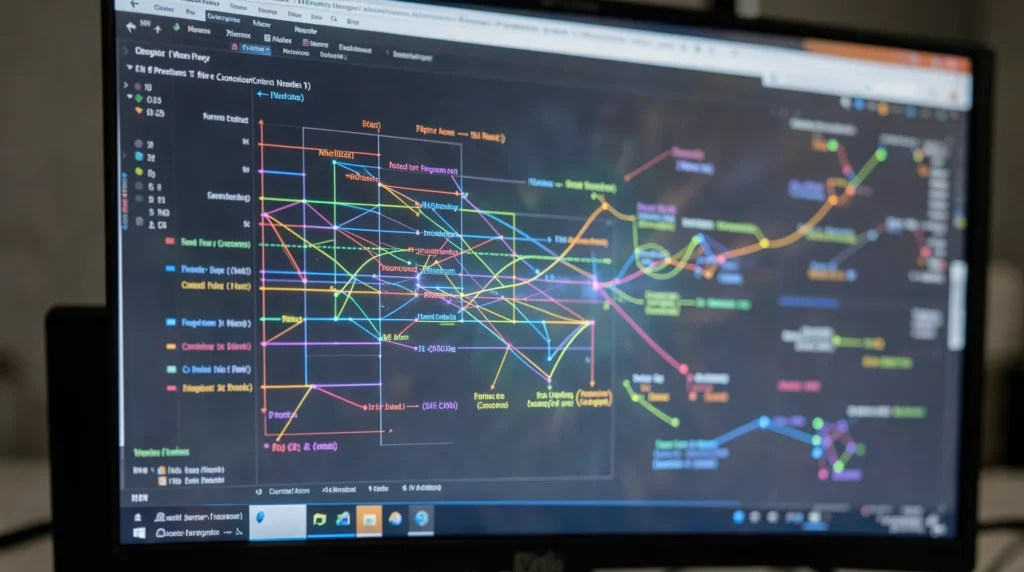
Advanced Data Visualization Techniques in Matplotlib

Advanced Data Visualization Techniques in Matplotlib

Interactive visualizations in Python using ipywidgets with Matplotlib or Plotly enable dynamic data exploration through sliders, dropdowns, and buttons. These tools support adjustable parameters for 2D and 3D plots, customizable layouts with VBox and HBox, and seamless integration within Jupyter notebooks for enhanced analysis.
Data Preprocessing with Keras Utilities

Data Preprocessing with Keras Utilities

Data augmentation enhances machine learning model robustness, particularly in computer vision. Keras' `ImageDataGenerator` allows real-time transformations like rotation, zoom, and brightness adjustments, improving generalization and reducing overfitting. Efficient data pipelines using Keras and TensorFlow optimize training performance while applying augmentations on-the-fly.
Building Scalable Applications with Django

Building Scalable Applications with Django

Database interactions under load highlight the impact of design choices. Minimizing queries per request, using batching techniques, and leveraging prepared statements enhance performance. Connection pooling, short transactions, and read replicas improve scalability. Caching layers and regular query execution plan analysis further optimize database efficiency.
Working with Cursors in MongoDB Queries with Pymongo

Working with Cursors in MongoDB Queries with Pymongo

Efficient data handling in MongoDB is vital for application performance. Control memory usage by utilizing limit() and batch_size() for cursor retrieval. Properly close cursors to prevent resource leaks. Use projection to minimize data transfer and apply aggregation frameworks for bulk operations. Monitor query performance to optimize operations and scale effectively.
Advanced Signal Filtering with scipy.signal

Advanced Signal Filtering with scipy.signal

Enhancing efficiency in large-scale signal analysis is crucial. Utilize Python with libraries like NumPy and SciPy for optimal performance. Key strategies include vectorized operations, efficient memory management, Numba for just-in-time compilation, parallel processing, and employing Fast Fourier Transforms (FFT) for reduced computational complexity. Profiling tools help identify bottlenecks.
Using math.fabs for Absolute Value Calculation

Using math.fabs for Absolute Value Calculation

Absolute values play a crucial role in various applications, including data analysis, statistical metrics like Mean Absolute Error (MAE), and financial performance tracking. They help quantify errors and assess performance without direction bias. In machine learning, absolute values are vital in loss functions, enhancing model robustness and efficiency.