TensorFlow Integration with TensorFlow.js for Web Applications

TensorFlow Integration with TensorFlow.js for Web Applications

Performance optimization in scalable web-based AI applications involves maximizing hardware utilization with TensorFlow.js by managing tensor lifecycles, selecting appropriate backends like WebGL or WebGPU, batching inputs, profiling memory and execution, and applying model quantization and pruning for efficient inference and reduced resource consumption.
Implementing Regularization Techniques in TensorFlow

Implementing Regularization Techniques in TensorFlow

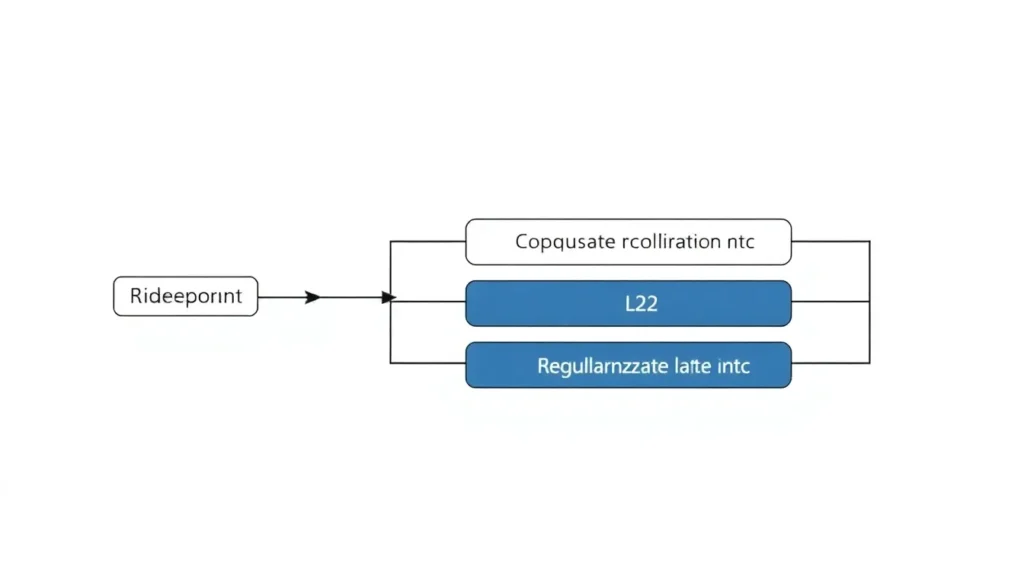
Custom regularization functions in TensorFlow allow for tailored constraints to enhance model performance. Implementing these as callable classes or functions provides flexibility in encoding domain knowledge into loss functions. Techniques include L1, L2, and smoothness penalties, enabling nuanced control over weight behaviors and aiding in tasks like feature selection and model compression.
Deploying TensorFlow Models with TensorFlow Serving

Deploying TensorFlow Models with TensorFlow Serving

TensorFlow Serving enables efficient model deployment with performance monitoring and load balancing capabilities. Key features include Prometheus monitoring for metrics analysis, Kubernetes integration for scaling, and automated testing for reliability. Implementing these aspects ensures optimal performance and stability in production environments.
Understanding Gradients and Automatic Differentiation with tf.GradientTape

Understanding Gradients and Automatic Differentiation with tf.GradientTape

TensorFlow's automatic differentiation simplifies gradient computation through tf.GradientTape, enabling efficient reverse-mode differentiation. This powerful feature supports nested gradients, higher-order derivatives, and complex models like multi-layer perceptrons. With eager execution and tf.function, TensorFlow balances usability and performance, streamlining machine learning workflows.
TensorFlow for Reinforcement Learning

TensorFlow for Reinforcement Learning

Implementing batch updates in reinforcement learning enhances stability and accelerates training by processing multiple samples simultaneously. Utilizing TensorFlow's features, such as target networks and policy gradient methods, improves convergence and reduces variance. Optimizing hyperparameters, including learning rates and batch sizes, is crucial for effective model performance.
Implementing Convolutional Neural Networks with tf.keras.layers.Conv2D

Implementing Convolutional Neural Networks with tf.keras.layers.Conv2D

Keras Conv2D parameters for optimal CNN performance. Analysis of kernel_size, filters, padding, and BatchNormalization. Also covers efficient SeparableConv2D layers and kernel_regularizer to combat overfitting. This approach improves accuracy, speed, and training stability in your network.