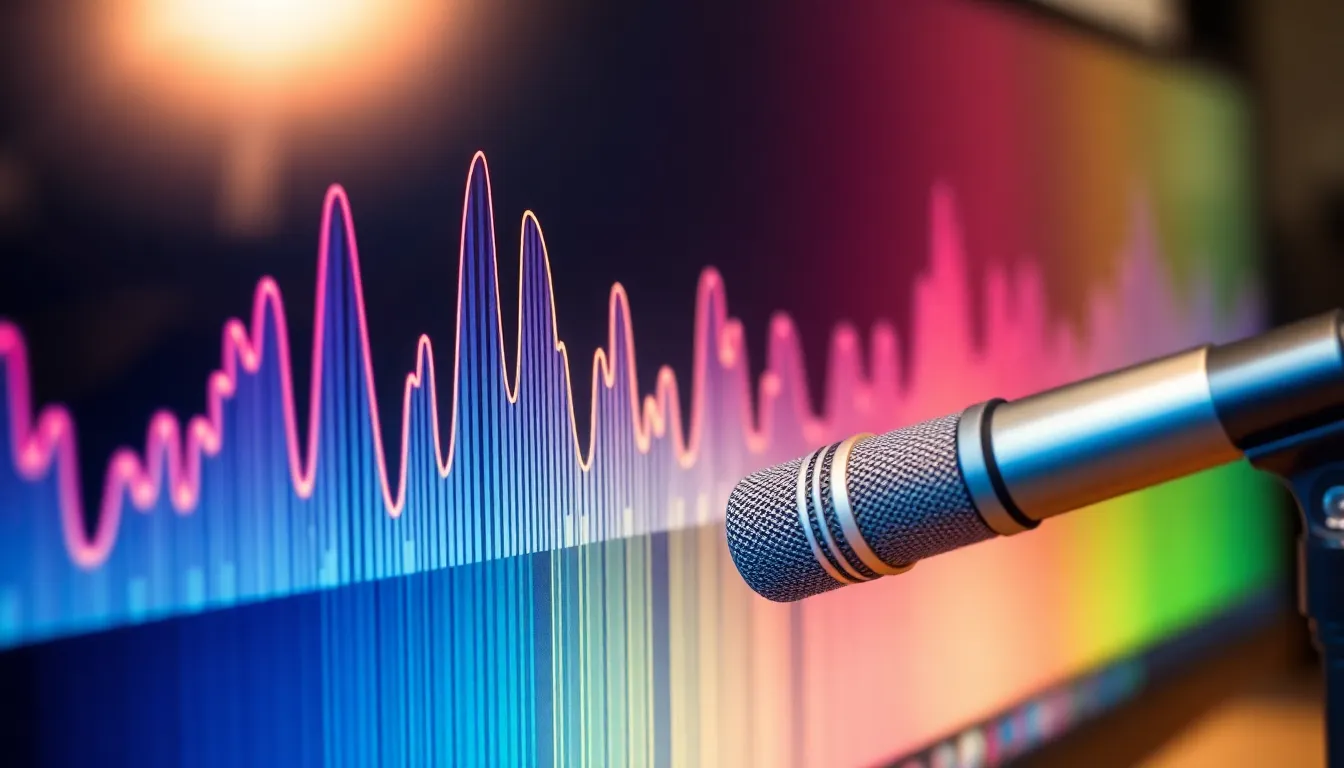
At its core, speech processing boils down to translating the continuous, analog sound waves of human voice into a format a computer can understand and work with. This begins with capturing an audio signal, which is essentially a complex waveform representing pressure variations over time. The challenge lies not just in capturing sound, but making sense of it computationally.
The first step after capturing audio is digitization: converting the analog waveform into a sequence of discrete samples. That’s fundamental because all processing in Python, or any other digital system, requires numerical data. Sampling rate very important here. Commonly, 16 kHz or 44.1 kHz are chosen as they represent a balance between quality and processing overhead. Nyquist’s theorem tells us we need at least twice the max frequency present in the signal to reconstruct it properly, so for human voice—mostly contained below 8 kHz—16 kHz sample rate suffices.
Once the audio is digital, we apply feature extraction techniques to distill meaningful patterns. Raw audio waveforms are rarely used directly in speech recognition because they are high-dimensional and noisy. Instead, features like Mel-Frequency Cepstral Coefficients (MFCCs) capture the timbral aspects of speech that align with how humans perceive sound. To do this, the signal is windowed into short frames (typically 20-40 ms) to assume quasi-stationarity. Then, we perform a Fourier transform to move into the frequency domain, and apply Mel filter banks to better mimic auditory perception before calculating the coefficients.
Speech is inherently variable—different speakers, accents, background noise, and even emotional state can dramatically alter these features. Handling this variability requires statistical or machine learning models that focus on the underlying linguistic content rather than idiosyncrasies of individual sounds. Classic approaches use Hidden Markov Models for temporal pattern recognition combined with Gaussian Mixture Models for acoustic variation. More recently, deep neural networks have taken the lead by learning complex feature hierarchies directly from raw or minimally processed audio.
The temporal nature of speech implies that context matters. Isolated phonemes rarely convey meaning without their neighbors. Therefore, recognition systems break down the signal into sequences and model transitions. Dynamic time warping was originally used to align sequences of different lengths, but now recurrent neural networks (RNNs) or transformers handle these sequences by capturing long-range dependencies and contextual cues in the speech signal.
All this processing happens under the hood of voice recognition libraries, but understanding these basics is essential when you need to tweak performance or debug quirks in recognition accuracy. It also illuminates why data quality, proper pre-processing, and robust modeling choices can make or break a project’s success in natural language understanding.
To put things into perspective, here’s a simplified example demonstrating how we might extract MFCC features from a raw audio file using the librosa library, one of the foundational tools for audio analysis in Python:
import librosa

# Load an audio file as waveform 'y' with sampling rate 16 kHz
y, sr = librosa.load('audio_sample.wav', sr=16000)

# Extract MFCC features, 13 coefficients per frame by default
mfccs = librosa.feature.mfcc(y=y, sr=sr, n_mfcc=13)

print(mfccs.shape)  # (13, number_of_frames)
The resulting mfccs matrix contains a compact representation over time, and serves as the input to downstream models. You often combine this with delta coefficients to encode temporal changes, stacking those features for more robust recognition. That’s just a scratch on the surface but reveals the crucial transformation from raw sound to actionable data.
Speech processing is not just about the audio signals; linguistic context, syntactic rules, and semantic understanding layer on top. But mastery of these acoustical fundamentals underpins the entire system’s ability to accurately parse the spoken word into text or commands.

Amazon Fire HD 8 Kids tablet, ages 3-7 | 4GB memory, includes ad-free and exclusive content, parental controls and 13-hr battery, 64GB, Blue, (2024 release)
$169.99 (as of October 15, 2026 00:39 GMT +00:00 - More infoProduct prices and availability are accurate as of the date/time indicated and are subject to change. Any price and availability information displayed on [relevant Amazon Site(s), as applicable] at the time of purchase will apply to the purchase of this product.)choosing the right Python tools for voice recognition
When it comes to implementing voice recognition in Python, several libraries stand out due to their robust capabilities and ease of use. The choice of library can significantly impact the performance and accuracy of your application. Some of the most popular libraries include SpeechRecognition, pocketsphinx, and Google Cloud Speech-to-Text. Each of these has its strengths and is suited for different use cases.
The SpeechRecognition library is particularly uncomplicated to manage for beginners. It provides a simple interface to several speech recognition engines and APIs, which will allow you to quickly prototype your application without delving into the complexities of the underlying algorithms. Here’s how you can use it to recognize speech from an audio file:
import speech_recognition as sr

# Initialize recognizer
recognizer = sr.Recognizer()

# Load an audio file
with sr.AudioFile('audio_sample.wav') as source:
    audio_data = recognizer.record(source)

# Recognize speech using Google Web Speech API
try:
    text = recognizer.recognize_google(audio_data)
    print("Recognized text:", text)
except sr.UnknownValueError:
    print("Google Web Speech API could not understand audio")
except sr.RequestError as e:
    print(f"Could not request results from Google Web Speech API; {e}")
This snippet showcases the simplicity of using SpeechRecognition to convert speech in an audio file to text. However, it’s important to note that this library relies on external APIs and may require an internet connection for certain functionalities.
Pocketsphinx is another option, known for its lightweight nature and ability to run offline. It’s particularly well-suited for embedded systems or applications where internet access is limited. Here’s an example of how to use pocketsphinx for speech recognition:
from pocketsphinx import LiveSpeech

# Initialize LiveSpeech for real-time speech recognition
for phrase in LiveSpeech():
    print(phrase)
This code will continuously listen for speech input and print recognized phrases. Pocketsphinx is less accurate than cloud-based services but offers the advantage of speed and offline capabilities, making it a good choice for specific applications.
For more complex applications requiring high accuracy, Google Cloud Speech-to-Text is highly recommended. It supports a wide range of languages and dialects and incorporates advanced machine learning models. To use it, you need to set up a Google Cloud account and install the Google Cloud client library. Here’s an example:
from google.cloud import speech

# Initialize the client
client = speech.SpeechClient()

# Load audio file
with open('audio_sample.wav', 'rb') as audio_file:
    content = audio_file.read()

# Configure the audio encoding and language
audio = speech.RecognitionAudio(content=content)
config = speech.RecognitionConfig(
    encoding=speech.RecognitionConfig.AudioEncoding.LINEAR16,
    sample_rate_hertz=16000,
    language_code='en-US'
)

# Perform speech recognition
response = client.recognize(config=config, audio=audio)

for result in response.results:
    print("Recognized text:", result.alternatives[0].transcript)
This code snippet demonstrates how to send audio data to Google Cloud for processing and retrieve the transcribed text. The integration of cloud services like this can significantly enhance the performance of your voice recognition systems, especially when dealing with diverse accents and noisy environments.
However, one must consider the trade-offs between accuracy, latency, and cost when selecting a tool. For instance, offline solutions like pocketsphinx may be preferable in scenarios where latency is critical, while cloud services may be favored for their superior accuracy and language support. Additionally, handling background noise and ensuring clear audio input are common challenges that can arise when working with voice recognition systems. Techniques such as noise reduction algorithms, microphone choice, and proper audio preprocessing can help mitigate these issues.
As you dive deeper into voice recognition, understanding these tools and their respective strengths will empower you to build more effective systems. The choice of library is not merely a technical decision but one that can shape the overall user experience and functionality of your application. Balancing trade-offs based on your specific use case is key to achieving optimal results. It’s also wise to stay updated with advancements in the field, as new tools and methods continually emerge, offering improved performance and capabilities.
handling common challenges in voice input systems
Handling challenges in voice input systems requires a multi-faceted approach, as the environments in which speech recognition operates can be highly variable. One of the most pressing issues is background noise, which can severely impact the accuracy of recognition. To combat this, noise reduction techniques are often employed. These can range from simple filtering methods to more sophisticated algorithms like spectral subtraction or Wiener filtering. Below is a basic example of applying a noise gate using Python’s SciPy library:
import numpy as np
from scipy.io import wavfile

# Load the audio file
sample_rate, data = wavfile.read('noisy_audio.wav')

# Apply a simple noise gate
threshold = 500  # Adjust this threshold based on the noise level
data_cleaned = np.where(np.abs(data) < threshold, 0, data)

# Save the cleaned audio
wavfile.write('cleaned_audio.wav', sample_rate, data_cleaned)
Another common challenge is the variability in speech patterns among different users. Accents, speech rates, and individual pronunciation can introduce significant discrepancies. To address this, training models on diverse datasets that encompass a wide range of accents and speaking styles is essential. Data augmentation techniques, such as speed perturbation or pitch shifting, can also help create a more robust model. Here’s a simple example of how to use librosa to augment audio data:
import librosa

# Load the original audio file
y, sr = librosa.load('audio_sample.wav', sr=None)

# Speed perturbation (increase speed by 10%)
y_fast = librosa.effects.time_stretch(y, rate=1.1)

# Save the augmented audio
librosa.output.write_wav('audio_sample_fast.wav', y_fast, sr)
In addition to noise and variability, the context in which voice input is captured can lead to challenges. For instance, if a user speaks too quickly or mumbles, the recognition system may struggle to interpret the input correctly. Implementing a feedback mechanism that allows users to correct misrecognized commands can enhance the overall usability of the system. Here’s a simple implementation of a feedback loop in a speech recognition application:
import speech_recognition as sr

recognizer = sr.Recognizer()

with sr.Microphone() as source:
    print("Please say something:")
    audio_data = recognizer.listen(source)

try:
    text = recognizer.recognize_google(audio_data)
    print("You said:", text)
except sr.UnknownValueError:
    print("Sorry, I could not understand the audio.")
    # Ask for clarification
    print("Please repeat:")
    audio_data = recognizer.listen(source)
    text = recognizer.recognize_google(audio_data)
    print("You said:", text)
except sr.RequestError as e:
    print(f"Could not request results; {e}")