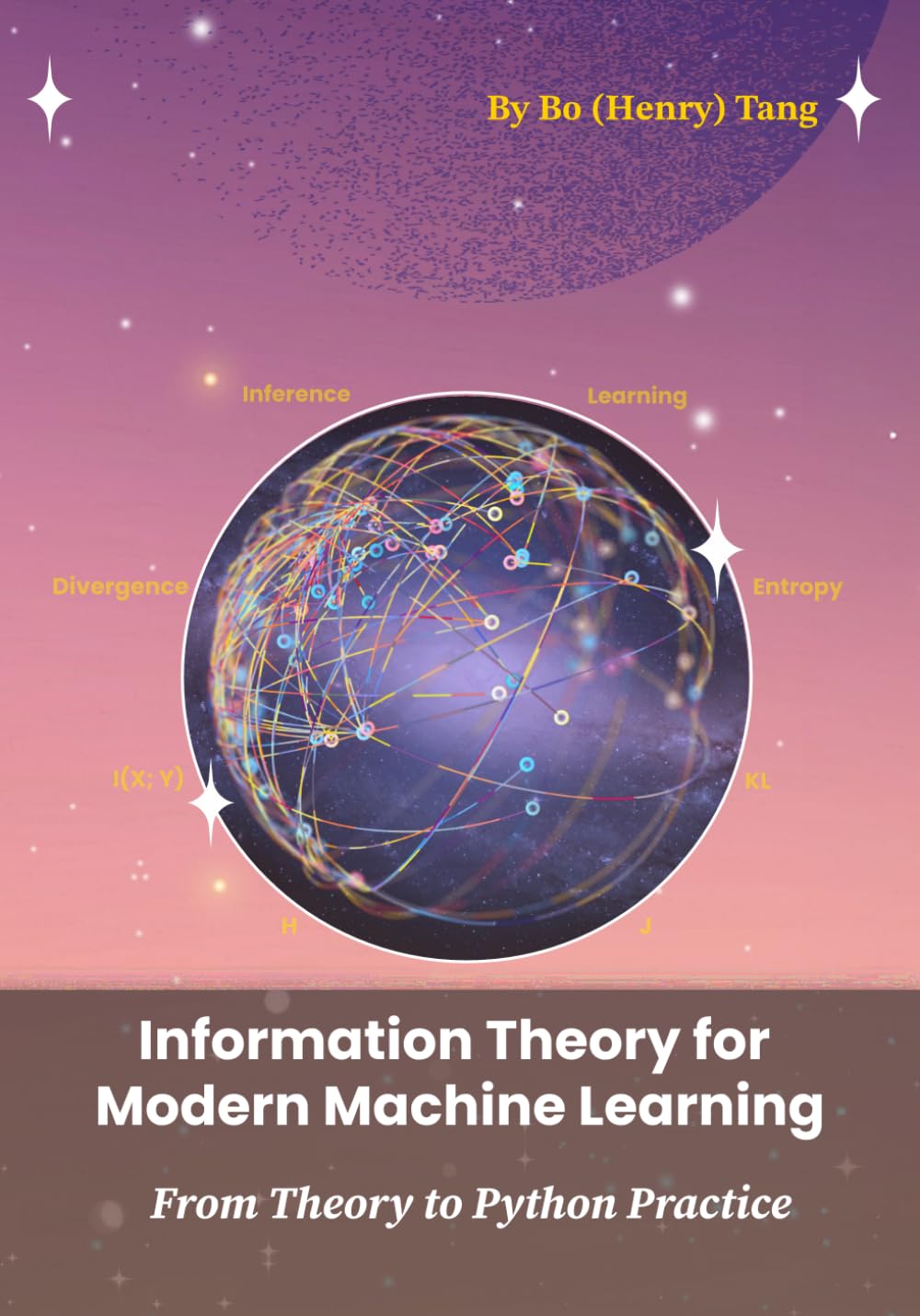
If you’re looking to dive into the realm of information theory and how it intersects with modern machine learning, then let me tell you, Information Theory for Modern Machine Learning: From Theory to Python Practice is a gem waiting to be uncovered. This isn’t just another dry textbook; it’s a practical guide that teaches you not only the theory but also how to apply it using Python. That’s a powerful combo!
Who Is This For?
The book is perfect for:
- Machine Learning Enthusiasts: If you’re already familiar with basic ML techniques but want to understand the underlying principles, the book will elevate your game.
- Data Scientists: Professionals looking to sharpen their analytical skills will find valuable insights that can enhance their projects.
- Students: Those studying computer science or statistics will appreciate the practical approach intertwined with theory.
- Python Programmers: If you’re a coder excited about integrating theoretical concepts into code, the book is right up your alley.
What You Can Expect
The author doesn’t just skim the surface. You’ll get deep dives into:
- Core Concepts: From entropy to mutual information, these foundations will be thoroughly explained.
- Practical Examples: Forget theoretical fluff. Each chapter includes Python exercises and examples that you can actually implement.
- Real-world Applications: Learn how to use information theory to solve actual problems in ML. The practical approach helps you visualize how these concepts work in the real world.
So if you’re serious about leveling up your understanding of both information theory and its application in machine learning, this book is a must-have. It blends the theoretical with the practical seamlessly, making complex ideas easier to digest and implement. Grab a copy, fire up Python, and get ready to enhance your data-savvy skills!