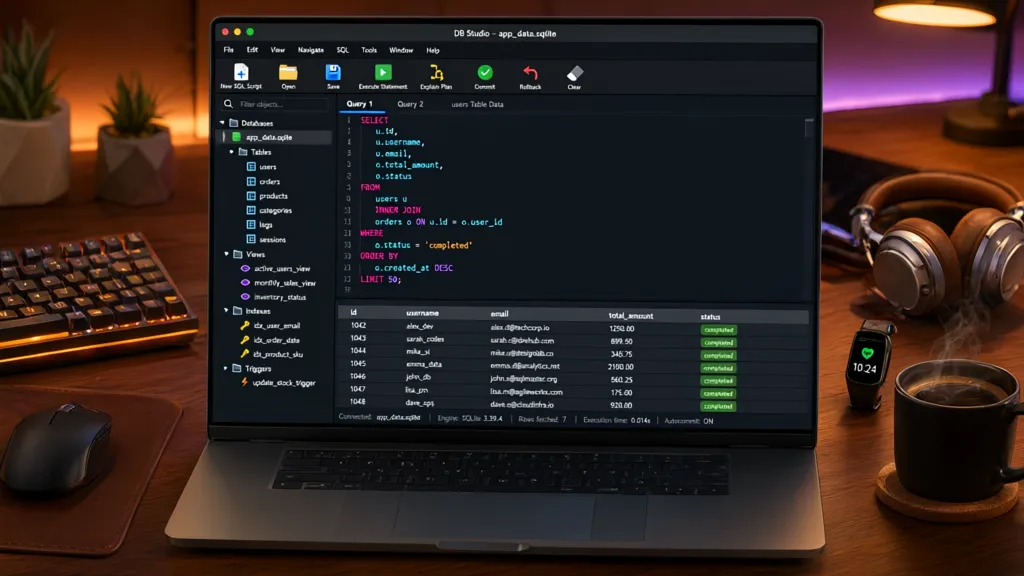
Working with Large Datasets in SQLite3

Working with Large Datasets in SQLite3

Managing transactions and concurrency in SQLite3 is essential for data integrity and performance in multi-threaded applications. SQLite's transaction management system, including BEGIN, COMMIT, and ROLLBACK statements, ensures consistent states. Utilizing locking mechanisms and various isolation levels allows for effective concurrency control, while performance monitoring can identify bottlenecks.
Securing SQLite3 Databases with Encryption Techniques

Securing SQLite3 Databases with Encryption Techniques

Implementing best practices for encrypted SQLite3 databases is crucial for data security and application performance. Key strategies include maintaining strong access controls, regular key rotation, and monitoring access logs. Secure coding practices, multi-layer encryption, and careful backup planning further enhance protection against unauthorized access and vulnerabilities.
Using SQLite3 Row Factory for Custom Row Objects

Using SQLite3 Row Factory for Custom Row Objects

Implementing lazy loading with custom row classes optimizes database interactions by deferring expensive operations. This approach enhances performance, especially when handling related data. Custom factories for classes like Person and Event streamline data handling, ensuring your application processes fully-formed Python objects while reducing redundant logic.
SQLite3 Database Backup and Restore Techniques

SQLite3 Database Backup and Restore Techniques

Restoring databases with the sqlite3 backup API involves common pitfalls that can lead to data loss. Key issues include restoring to an open connection, schema mismatches, and large database sizes. Implementing error handling and ensuring a clean database state before restores are essential for maintaining data integrity and application responsiveness.
Querying Data from SQLite Database using SQLite3

Querying Data from SQLite Database using SQLite3

SQLite3 query results can be effectively handled in Python using data structures. Utilize fetchall() to retrieve all rows or fetchone() for a single row. Named tuples improve data readability and maintainability. Consider sorting or filtering results in Python, and always implement error handling with try-except blocks for robust applications.