Visualizing Model Architectures in Keras

Visualizing Model Architectures in Keras

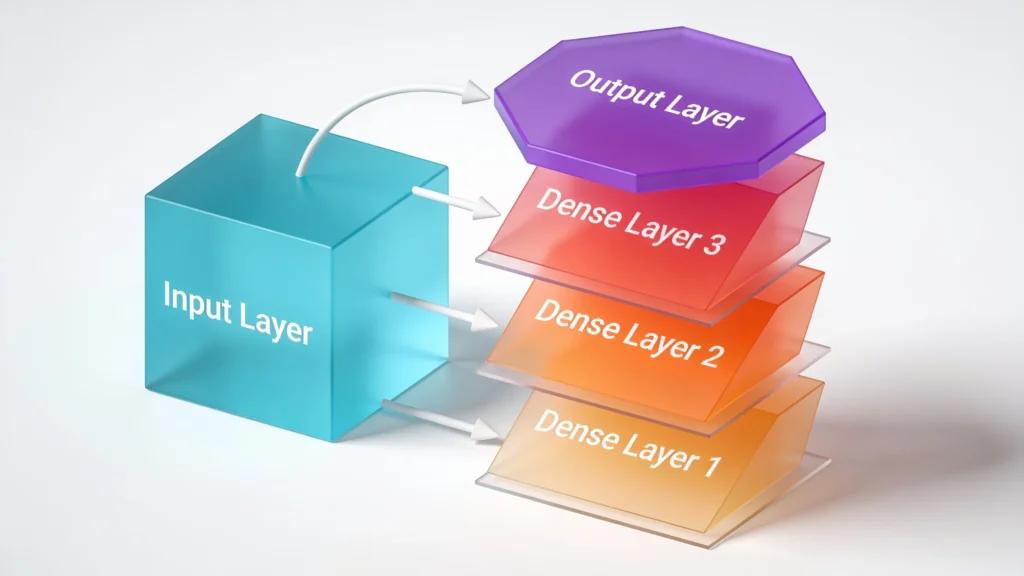
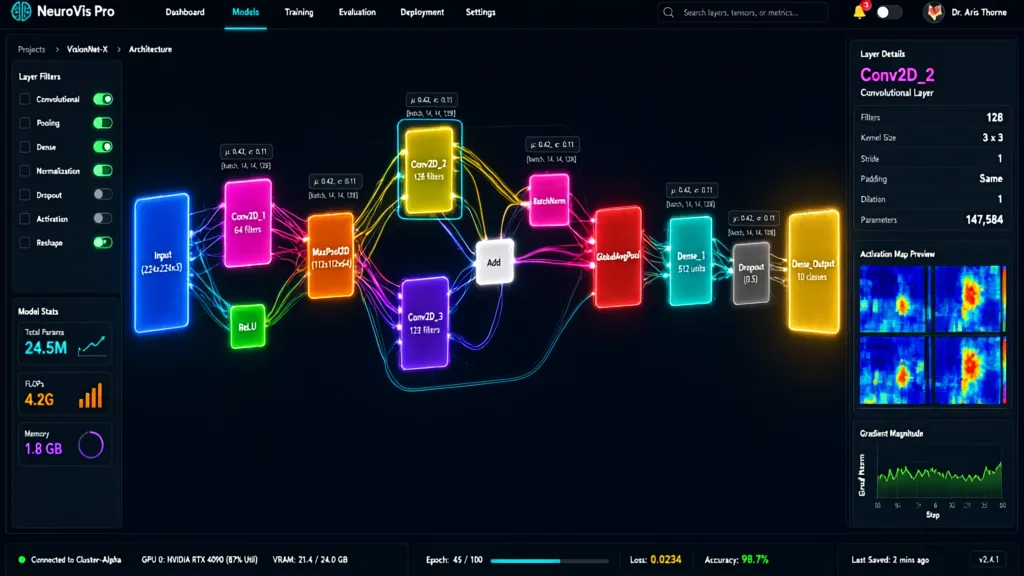
Understanding architectural diagrams in deep learning is essential for recognizing layer interactions, especially attention mechanisms and residual connections. These elements enhance model performance and interpretability. Keras offers tools for implementing these features while ensuring shape compatibility. Clear diagrams facilitate collaboration and understanding of complex architectures.
Using keras.layers.Flatten for Input Data

Using keras.layers.Flatten for Input Data

Flattening in data preprocessing is crucial for transitioning from feature extraction to classification in machine learning models. Key practices include visualizing output dimensions, normalizing input data, and augmenting datasets to enhance generalization. Consider image size and experiment with activation functions in dense layers to optimize performance.
Data Preprocessing with Keras Utilities

Data Preprocessing with Keras Utilities

Data augmentation enhances machine learning model robustness, particularly in computer vision. Keras' `ImageDataGenerator` allows real-time transformations like rotation, zoom, and brightness adjustments, improving generalization and reducing overfitting. Efficient data pipelines using Keras and TensorFlow optimize training performance while applying augmentations on-the-fly.
Keras Integration with tf.data for Data Pipelines

Keras Integration with tf.data for Data Pipelines

Debugging and optimizing tf.data pipelines involves understanding its lazy, graph-based execution model. Key strategies include isolating transformations, utilizing TensorFlow's Profiler, enabling parallel batching, and prefetching to enhance throughput. Properly managing dataset loading and caching also improves performance while avoiding common pitfalls in pipeline construction.
Image Data Augmentation with keras.preprocessing.image

Image Data Augmentation with keras.preprocessing.image

Keras’s ImageDataGenerator and tf.keras.layers.experimental.preprocessing module offer powerful tools for image augmentation in deep learning models. By integrating augmentation layers directly into model architecture, users benefit from on-the-fly processing, GPU acceleration, and streamlined deployment. Key layers include RandomFlip, RandomRotation, and RandomZoom, enhancing dataset variability and model performance.