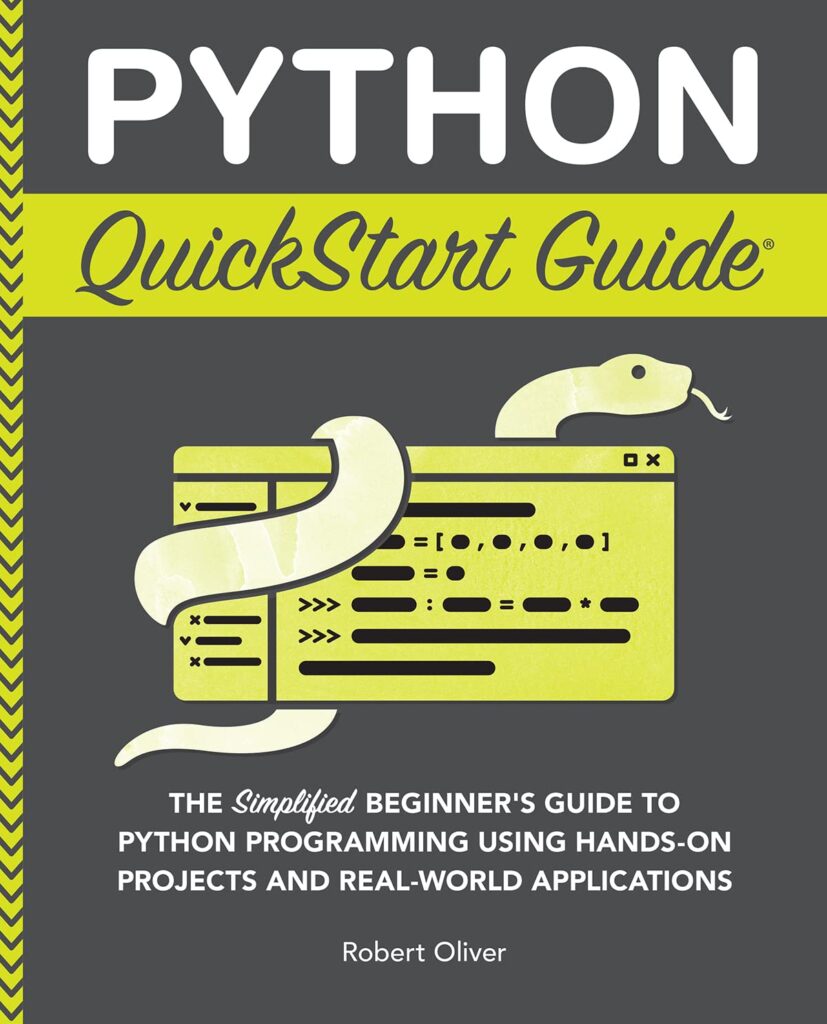
Most programming books make a bad trade-off. They either teach you the atoms of a language—the syntax, the keywords, the standard library—and leave you wondering how to build anything real. Or, they show you how to build one specific project, which you can follow like a recipe, but you don’t actually learn the principles. You learn to assemble one kind of chair, but you can’t design a table.
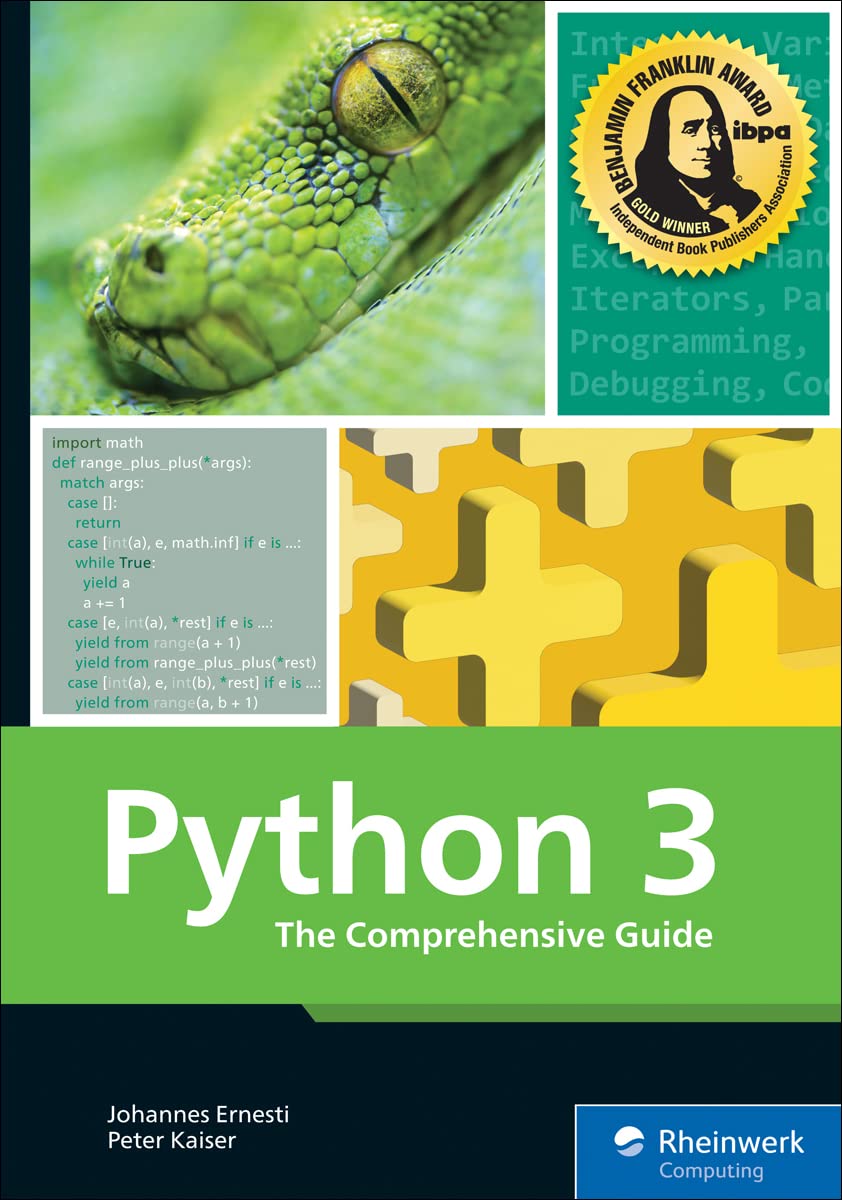
Every now and then you find a book that tries to do both. This seems to be one of them. It’s not a short book; its size telegraphs its ambition. The surprising thing isn’t its comprehensiveness, but its apparent goal of being both a foundational guide and a practical reference. The fact that it won a serious award suggests it pulls this off better than most.




Apple AirPods 4 Wireless Earbuds, Bluetooth Headphones, Personalized Spatial Audio, Sweat and Water Resistant, USB-C Charging Case, H2 Chip, Up to 30 Hours of Battery Life, Effortless Setup for iPhone
$141.98 (as of December 9, 2025 08:27 GMT +00:00 - More infoProduct prices and availability are accurate as of the date/time indicated and are subject to change. Any price and availability information displayed on [relevant Amazon Site(s), as applicable] at the time of purchase will apply to the purchase of this product.)So, who should actually get this?
The description says it’s for everyone from beginners to professionals, which is usually a red flag. But a book this substantial might actually serve both, just in very different ways.
If you’re just starting out
That’s not for the tourist, the person who wants to “learn Python in a weekend.” This is for the person who is serious about becoming a programmer. Think of it as your first well-stocked workshop. You could just learn what a screwdriver is, or you could get a whole chest of tools and a guide that shows you not just what they are, but what they’re for. The book appears to be the latter. The advice is simple:
- Start at the beginning and don’t skip the “boring” stuff. The sections on data types and program structure are the foundation you’ll build everything else on.
- When you get to the downloadable code, don’t just run it. Break it. Change a variable. Delete a line. See what happens. Understanding comes from fixing what you broke.
- Don’t feel pressured to read it cover-to-cover in one go. Work through the fundamentals, then use the advanced sections as a map for where you might want to go next. GUI programming? Web apps with Django? Pick a path and dive in.
If you are already a programmer
You’re not learning to program; you’re learning Python. Your problem isn’t understanding loops or objects. Your problem is wasting time. You need to quickly find the canonical “Pythonic” way to do something you already know how to do in another language. Your other problem is filling the gaps in your knowledge efficiently. You might be a backend developer who suddenly needs to understand some scientific computing libraries for a new project.
For you, the book isn’t a tutorial, it is a lever. Instead of sifting through a decade of blog posts and Stack Overflow answers of varying quality, you have a single, vetted resource. You can skip the first hundred pages. You can jump straight to the chapters on network programming, or Django, or connecting to C code. The value is having a reliable guide to the parts of the Python ecosystem you haven’t touched yet, all in one place.
The goal of a book like this isn’t to make you “know” Python. It’s to reduce the friction between an idea in your head and a working program. It gives you the raw materials—the core language, the standard library, and a tour of the major advanced toolkits—so you can spend less time searching and more time building. The book seems like an unusually good map. The journey, as always, is up to you.