The hard part about teaching a kid to code isn’t the syntax. It is the abstraction. You’re asking them to manipulate invisible concepts to get a result they can’t immediately see. Success requires a leap of faith that most kids, understandably, aren’t willing to make. It’s boring.
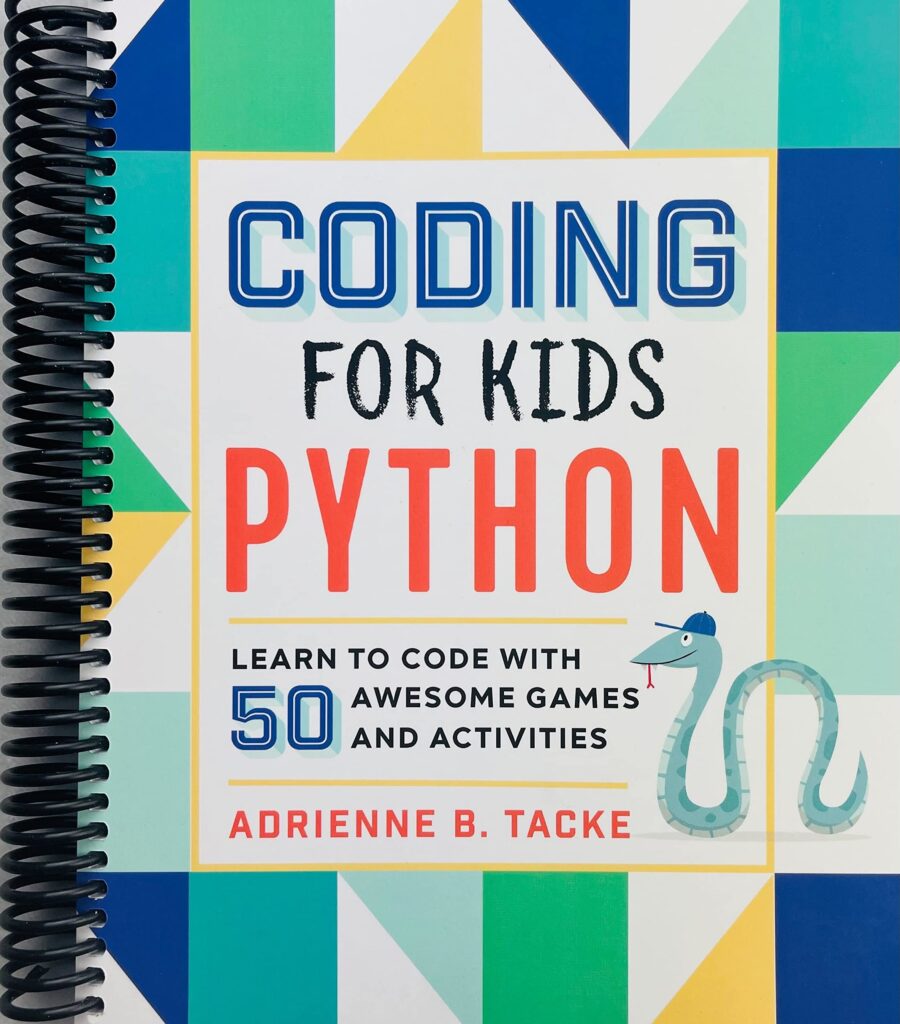
The book seems to understand that. It grounds everything in a tangible result. You don’t learn about variables in a vacuum; you learn about them because you need to keep score in a game. You don’t study loops academically; you use one to draw a cool pattern on the screen. It works because it shortcuts the path from concept to reward.
What You are Actually Getting
The choice of Python is a good one. It is a real language used by professionals, so you’re not learning a dead-end “educational” language. But the syntax is clean enough that it doesn’t get in the way. The focus here isn’t on mastering Python, but on using it as a tool to build things.
The projects are the core of it. They seem to ramp up in a logical way, giving a kid a series of small, achievable wins. That is the whole secret to learning something difficult: breaking it down into a sequence of satisfying steps. The projects appear to be:
- Instantly gratifying. Things like Mad Libs or simple guessing games give immediate feedback.
- Visually oriented. Creating shapes and simple animations connects the code to something you can see.
- Game-focused. This provides the intrinsic motivation that lectures and exercises lack.
A Surprisingly Important Detail
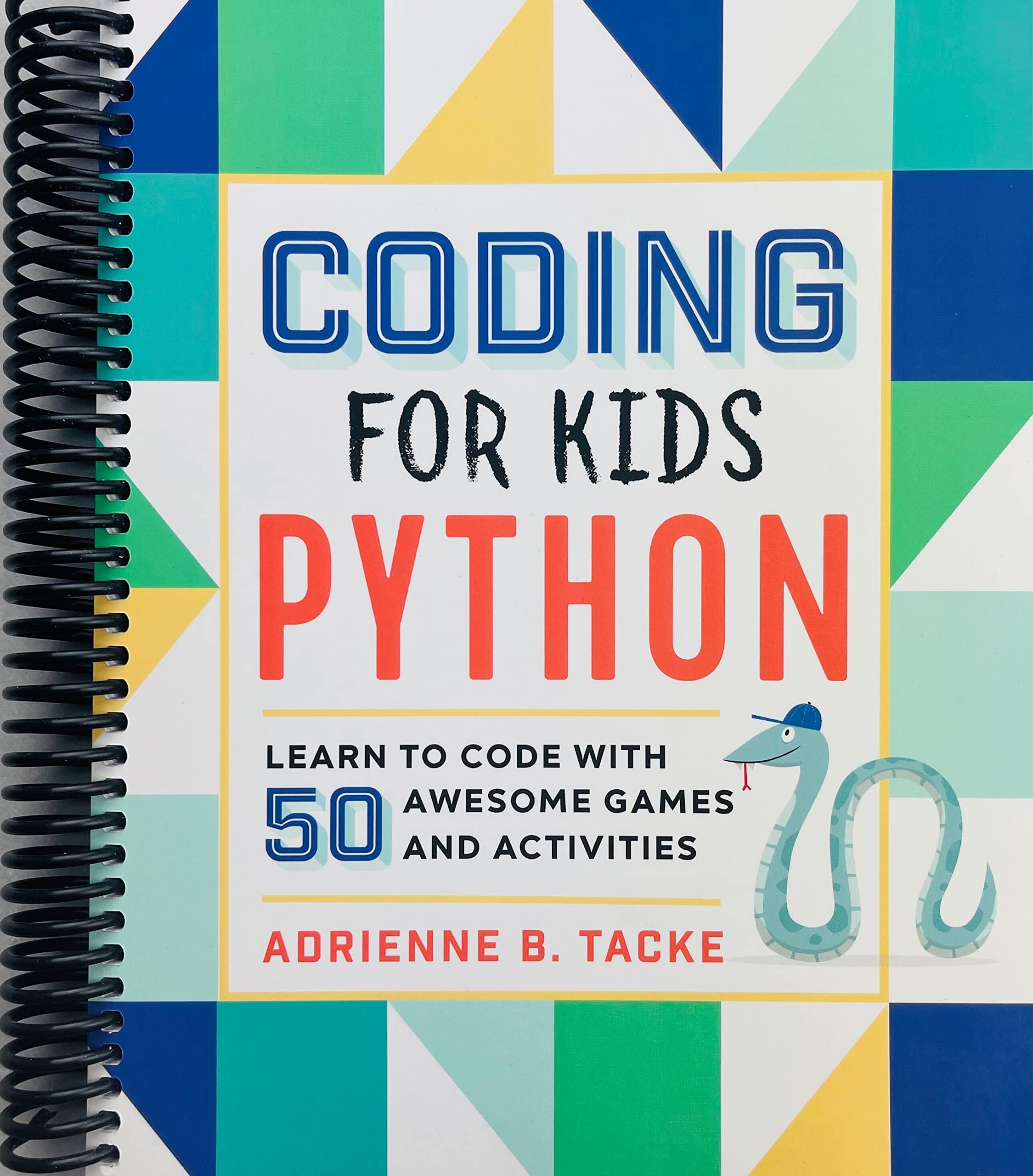
This might seem trivial, but the fact that it’s spiral-bound is a critical feature. Books about programming need to lie flat next to a keyboard. Most don’t. You’re constantly fighting to keep them open to the right page while you are trying to type. It’s a small point of friction that can kill momentum. The spiral binding shows that someone thought about how this book would actually be used, not just read.
Who Should Get This?
That’s for the kid, probably between 9 and 12, who is curious about how games or computers work but has zero programming experience. It’s for the kid who likes to build and tinker.
It’s also for the parent who wants to provide a structured starting point but doesn’t necessarily know where to begin themselves. You don’t need to be a programmer to help your kid with this book. You just need to help them get set up. This book provides the curriculum.
What a kid will get from this isn’t a deep understanding of computer science. They won’t be ready to build the next Facebook. What they will get is the foundational, and far more important, understanding that they can make a computer do what they want. They’ll learn that a program is just a series of logical steps and that “bugs” are just puzzles to be solved. It’s a launchpad. And for many kids, that is exactly what they need.